If you’re a law student stepping into the world of litigation, the term vakalatnama is something you’ll come across either whether during internships, moot courts, or your first court appearance. It may seem like just another simple document, signed and filed without much discussion, but it carries significant legal importance. In reality, a vakalatnama is the basis of an advocate’s authority to act on behalf of a client.
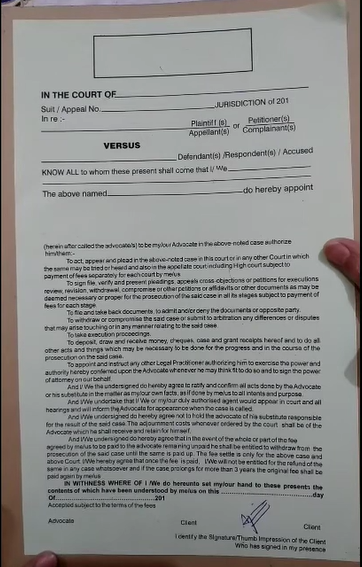
This article explains what vakalatnama is, it’s importance, how it is used, and etc.
What is Vakaltnama ?
A Vakalatnama is a legal document through which a client authorizes an advocate to represent them in a court of law. It is the basis of the lawyer–client relationship in litigation matters. Though a vakalatnama is not expressly mentioned in the Advocates Act, 1961,it remains a crucial document in legal practice.It traces it’s origin from the Code of Civil Procedure, 1908 which forms the backbone of the vakalatnama system, it does not expressly use the term, instead it refers to it as an “appointment in writing” or a “document of authorization” for a pleader to act on behalf of a party. However, almost all High Court Rules and Civil Rules of Practice across India use the specific name “Vakalatnama.”
The term “Vakalatnama” is derived from two words:
Vakil : meaning lawyer or advocate
Nama : meaning letter or document
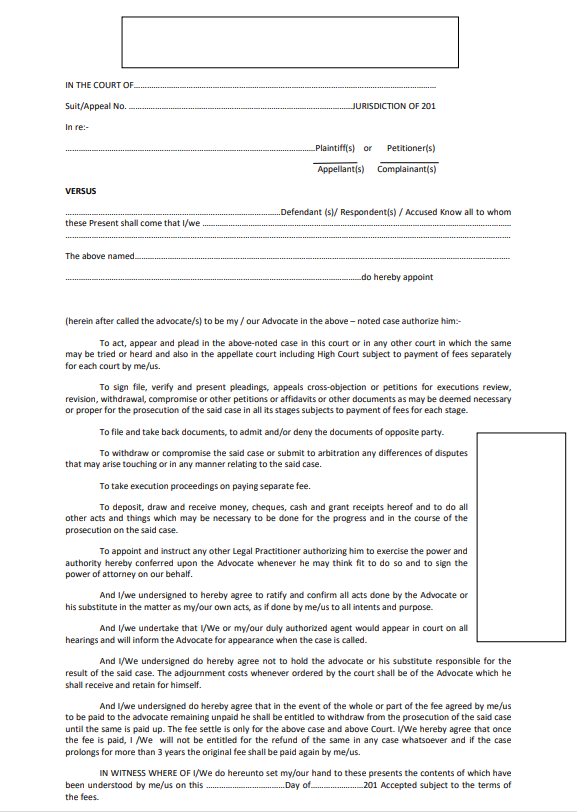
Key elements/details of a Vakalatnama
1. Court and Case Details
- Name of the Court
- Suit/Appeal Number
- Jurisdiction details
2. Parties to the Case
- Names of Plaintiff(s)/Petitioner(s)/Appellant(s)/Complainant(s)
- Names of Defendant(s)/Respondent(s)/Accused
3. Appointment of Advocate
- Statement where the client appoints the advocate to represent them
- Name(s) of the advocate(s)
4. Powers Granted to the Advocate
- To act, appear, and plead in court
- To sign, file, and verify pleadings and petitions
- To withdraw, compromise, or refer disputes to arbitration
- To file and receive documents
- To handle execution proceedings
- To receive or deposit money on behalf of the client
- To appoint another advocate (substitution power)
5. Client’s Undertakings
- Agreement to ratify acts of the advocate
- Undertaking to appear in court when required
- Agreement not to hold the advocate liable for the result
6. Fee and Payment Terms
- Separate fees for different courts/stages
- Right of advocate to withdraw if fees are unpaid
- Clause on non-refund of fees
7. Signatures and Execution
- Signature/thumb impression of the client
- Signature of the advocate
- Identification/attestation of client’s signature
- Date of execution
How Vakaltnama is filed ?
Vakalatnama is first prepared with all necessary details (mentioned above), it must clearly mention the authority being given to the lawyer. Appropriate court fee stamps((e.g., ₹2 to ₹10)) and advocate welfare stamps (e.g., ₹25 in Delhi/UP) required under the Advocates Welfare Fund Act. are attached . The value and type of stamps vary from state to state (depending on different court rules). The vakalatnama is than filed along with the plaint/written statement/petition in court. In ongoing cases, it can also be filed separately to appoint or change an advocate (with proper NOC ). Than the document is submitted to the court registry/filing counter, where it is checked , on successful acceptance, the vakalatnama becomes part of the official court record, and the advocate gets the right to represent the client.
Many courts now require a scanned PDF of the signed Vakalatnama to be uploaded to the e-courts portal.
How can a Vakalatnama be revoked?
Revocation of a vakalatnama means the termination of the authority given by a client to an advocate to act on their behalf.
- By the Client (Discharging the Lawyer)
The client can revoke the vakalatnama at any time. Usually done by filing “No Objection Certificate (NOC)” from the existing advocate or can also seek court permission if the advocate refuses. - By the Advocate (Withdrawing from the Case)
An advocate can withdraw anytime from the case , by informing the client (7-days written notice), either because of Conflict of interest, Lack of instructions , Non-payment. - Automatic Termination
- Death: Of either the client or the advocate.
- Completion of Proceedings (Remember, a fresh Vakalatnama must be filed whenever an appeal is preferred in a case,Even if you choose to keep the same lawyer, they must file a new Vakalatnama )

InnnLegal is a growing platform built for a young, curious, and ambitious audience focused on building strong legal careers.